
Wednesday, 22 November 2017
NBC Professional Communication
Having initiated contact with NBC regarding their current instructions, I sent across some rough images for the design of the new set. These images lead to NBC comissioning me to produce a full set of illustrations for their instructions, which is great! An actual paid brief!


Monday, 6 November 2017

Wednesday, 1 November 2017
CCS Co. Communication
Recently I was contacted by Ben from CCS Co. through text (which he got through Instagram). Ben has asked me to produce a series of images to put on some promotional tees to celebrate the opening of his store in March.
Being contacted this way was unusual, it felt very personal but also quite informal, however I did not find it too intrusive and am glad I put my number on there. I've met Ben before, so we have had some brief contact, so that immediately put the conversation into more of a familiar and casual tone.

Being contacted this way was unusual, it felt very personal but also quite informal, however I did not find it too intrusive and am glad I put my number on there. I've met Ben before, so we have had some brief contact, so that immediately put the conversation into more of a familiar and casual tone.

Friday, 27 October 2017
Website Research
Having looked a bit into some illustrators websites, I have come to the conclusion that some of the best websites, in terms of demonstrating portfolios of work, are in fact agency websites. They seem to be able to identify how to best display the work from different illustrators- and since a lot of my work is quite eclectic in style, I thought they would be a good place to start.


Thursday, 19 October 2017
Professional Manifesto
- Work towards a calmer living.
- Work at setting up a reliable passive income, supplemented with manageable levels of illustration and design work.
- ONLY work on briefs that interest me! Move away from having to grind out work.
- Be more proactive with posting to Instagram/ Updating website etc.
Tuesday, 10 October 2017
Working To A Schedule
 I want to be more organised in general, so I've decided to start creating detailed schedules for each of the briefs I will be taking part in, and the 603 module in general. Hopefully this will help me organise my time a bit better and hopefully produce better work.
Monday, 15 May 2017
Sunday, 14 May 2017
Life's a Pitch
Here is the final presentation for our Life's a Pitch brief. We chose to look at a couple of different aspects of creative industries- setting up a collective and putting on an exhibition. The brief was good fun and the group worked well together, we've also decided to actually make a go of the collective and will hopefully be taking part in group briefs in the future and especially over the summer.
Illustration in Advertising + Marketing

I wanted to look at how illustration is used in marketing and advertising so I scoured the web for a few examples of illustrated advertising campaigns. I came across a few that I wasn't necessarily a fan of the illustrations, but the idea remains- big companies want illustrators.
I was unsure at first weather this was something I really wanted to move towards, as I thought the work could be slow. But it seems there's load of opportunity for work as an illustrator, which is pretty exciting.
OUIL505
505 was a real eye-opener for me. I knew I had an interest in marketin gand advertising, but this brief really pushed me to explore this, and I really enjoyed this. I definitely think this fireld is something I would like to move into in the future, and I will begin looking for this type of work.
I like the blend of graphic design and illustration in the field, and the thought process behind the images needs to be a lot more in depth, application, colour and composition are incredibly important.
Here are a few images from 505 that I like the most, I think they best reflect where I want my practice to go in the future.


I like the blend of graphic design and illustration in the field, and the thought process behind the images needs to be a lot more in depth, application, colour and composition are incredibly important.
Here are a few images from 505 that I like the most, I think they best reflect where I want my practice to go in the future.


Brush Design- Shopify
So now that I've had a few briefs under my belt with the brush design, I am starting to gather quite a bit of custom from both amateur and professional illustrators/ artist/ graphic designers. The work load is steady, about 3 clients a week, which usually equates to around 50GBP a week. However, none of the brushes are exclusive to the client, which means I am allowed to sell them externally to others at my will.
The biggest issue I'm having with them is finding a 'shop' to sell them at. My housemate works in a similar way, selling digital products online, and having spoken to him about what formats to use he recommended shopify.com- a website that allows you to make customised shop fronts for selling products. He explained that it's relatively cheap, and makes the payment process incredibly easy.
I'l hopefully look to start setting this up over the summer, and hopefully look to turn it into an actual business.
https://www.shopify.com/plus/enterprise-ecommerce?term=shopify&Network=Search&SiteTarget=&mt=e&adid=188476595030&adpos=1t1&CampaignId=788843419&branded_enterprise=1&BOID=brand&gclid=CObd0sqv79MCFeGw7QodSKoCFw

The biggest issue I'm having with them is finding a 'shop' to sell them at. My housemate works in a similar way, selling digital products online, and having spoken to him about what formats to use he recommended shopify.com- a website that allows you to make customised shop fronts for selling products. He explained that it's relatively cheap, and makes the payment process incredibly easy.
I'l hopefully look to start setting this up over the summer, and hopefully look to turn it into an actual business.
https://www.shopify.com/plus/enterprise-ecommerce?term=shopify&Network=Search&SiteTarget=&mt=e&adid=188476595030&adpos=1t1&CampaignId=788843419&branded_enterprise=1&BOID=brand&gclid=CObd0sqv79MCFeGw7QodSKoCFw
Saturday, 13 May 2017
Creative Industries Report
My main goal with this report was to explore the boundaries between graphic design and illustration, and where the two meet and possibly contrast, as well as considering the types of clients I may encounter and how I might encounter them. I chose to interview Patrick Jackson- a graphic designer who's work is quite illustrative and who has a background in illustration.
I wanted to explore what lead him to his individual practices and where he sees his practice at the moment. In our interview Patrick said 'My current practice is heavily dictated by the client; I guess if you make work that people like the 'graphic design' element of, you will probably get more work as a graphic designer, and it probably works both ways with illustrators as well'. When questioned about the lines between graphic design and illustration, Patrick responded by saying 'I personally think the two blend relatively seamlessly, a lot of it is about portraying and image or mood, and both the applications have their place. If you can do both then brilliant, you've basically doubled your potential clients'. I think what Patrick said about both applications having their place makes sense, that each has an appropriate use and it will probably depend heavily on where the client wants it to go.
I then asked Patrick weather he struggle with wanting to add in illustrative elements to his graphic design projects, he stated that 'not every brief is the same, some clients will allow you to get away with putting your own stamp on a project but others will have none of it; it's totally dependant on what the client wants- you have to be assertive in what you think should be done, because you're the professional, but there's also an element of arse-kissing, cause they're essentially the ones paying the bills'.
Patrick told me that 'it's hard to find work as an illustrator if you're mainly doing graphic design work', explaining that 'it's like telling everyone you're the best portrait photographer in the world, and then wondering why no one is asking you to paint their portrait- they're the same but totally different, but I don't think they're exclusive in that you can't do both, you've just got to be shit hot at both'.
I also asked Patrick about how he finds clients, or if clients find him, he replied saying the majority of his clients 'have either worked with or know someone who's worked with' his agency before, and 'often the work falls into our laps', but that 'a lot of the work we [Patrick's agency] do is very similar- clients know what we do well and that's because we do a lot of it'. He explains 'I don't find much use for Instagram as a graphic designer, it's not very often I get that kind of work through social media, I think it's the corporate world and those types of clients we get just don't look at those kinds of interactions.
I wanted to explore what lead him to his individual practices and where he sees his practice at the moment. In our interview Patrick said 'My current practice is heavily dictated by the client; I guess if you make work that people like the 'graphic design' element of, you will probably get more work as a graphic designer, and it probably works both ways with illustrators as well'. When questioned about the lines between graphic design and illustration, Patrick responded by saying 'I personally think the two blend relatively seamlessly, a lot of it is about portraying and image or mood, and both the applications have their place. If you can do both then brilliant, you've basically doubled your potential clients'. I think what Patrick said about both applications having their place makes sense, that each has an appropriate use and it will probably depend heavily on where the client wants it to go.
I then asked Patrick weather he struggle with wanting to add in illustrative elements to his graphic design projects, he stated that 'not every brief is the same, some clients will allow you to get away with putting your own stamp on a project but others will have none of it; it's totally dependant on what the client wants- you have to be assertive in what you think should be done, because you're the professional, but there's also an element of arse-kissing, cause they're essentially the ones paying the bills'.
Patrick told me that 'it's hard to find work as an illustrator if you're mainly doing graphic design work', explaining that 'it's like telling everyone you're the best portrait photographer in the world, and then wondering why no one is asking you to paint their portrait- they're the same but totally different, but I don't think they're exclusive in that you can't do both, you've just got to be shit hot at both'.
I also asked Patrick about how he finds clients, or if clients find him, he replied saying the majority of his clients 'have either worked with or know someone who's worked with' his agency before, and 'often the work falls into our laps', but that 'a lot of the work we [Patrick's agency] do is very similar- clients know what we do well and that's because we do a lot of it'. He explains 'I don't find much use for Instagram as a graphic designer, it's not very often I get that kind of work through social media, I think it's the corporate world and those types of clients we get just don't look at those kinds of interactions.
Creative Industries Report Questions
For my creative report, I want to discuss the boundaries between graphic design and illustration. My practice seems to be moving somewhere between the two, so I wanted to discuss the differences with practitioners who do the same.
Monday, 8 May 2017


Thursday, 4 May 2017
Planning my Presentation
Last year's presentation didn't go too badly. I actually don't mind presenting. I'm not doing anything fancy with my presentation, just straight up talking. Hopefully the rarity of me actually being in uni and talking to people will create enough interest... Probably not.
Last year I think I ran out of things to say, that's probably because the presentation took 20 minutes to make and I rehearsed it exactly 0 times. This year I will. I think 20 sides should keep me busy enough, and hopefully the regular change in slides will keep people awake. I'll look at the 20 slides consisting of the following:
Last year I think I ran out of things to say, that's probably because the presentation took 20 minutes to make and I rehearsed it exactly 0 times. This year I will. I think 20 sides should keep me busy enough, and hopefully the regular change in slides will keep people awake. I'll look at the 20 slides consisting of the following:
1- Intro to me and my practice (quick)
2- Where my practice is moveing (marketing and advertising)
3- Where this move has taken my work (aesthetic + content)
4- Change in process
5- Focus on advertising
6- Examples of work and discription of brief
7- Change in approach to my work
8- Creative concerns surrounding marketing
9- Maketing Industry
10- Thomas Danthony- LA
11- Thomas Danthony- Process
12- Malika Favre- Fuertaventura
13 Malika Favre- Process
14- Aims- Marketing work (product and location)
15- 16- What I want to know more about
-Phychology
-Techniques
-Working in the industry
-Publishing + Copyrighting
- Agents etc
17- Brush Design- Intro
18- Where I am and where I want to take it.
19- Next year
- Do more briefs
- Develop my practice
- Work with more retailers+ small businesses
20- Summary
21- Questions?
18- Where I am and where I want to take it.
19- Next year
- Do more briefs
- Develop my practice
- Work with more retailers+ small businesses
20- Summary
21- Questions?
Tuesday, 2 May 2017
OUIL501 Evaluation
Following on form OUIL401, I was fairly nervous about getting started with COP this year. Essay writing is not something I have ever been very good at so I was a little bit apprehensive about considering a research question. However, once I got started, I found that the research and my discoveries were influencing the direction of my work really well, and that I wasn't struggling with being stunted or stalled by obstacles, the process ran really smoothly. I found that from the discovery of new information, I was constantly changing the title and direction of my essay as I was trying to fit in other parts of information and trying to make them relevant to my essay. Having spoken to some other students about this issue, I decided to just stick with the title I had, and only include information that was relevant to that question. This made the process much easier, and I found myself working much more efficiently.
I think he essay is by far the weakest part of my submission- as stated, written work is not something I have ever been good at, and structuring an essay was one of the most difficult parts of the module for me. However I think it provided a strong basis for investigation, allowing me to follow up on theories through exploration all work in my visual journal. This has definitely shown me the importance of context within my practise, and that academic research can be as important to my own practice as visual research is. I have really enjoyed allowing my learnings to influence my practice and I think it has lead to me using more collage and including satirical elements into my work.
Using satire is not something I have really done before, and it wasn't something I was ever really that interested in before. However, after working with satire during SB2, I found that I really enjoy making that type of work and it's hopefully something that I will look to include in my practice a lot more, and possible work with in COP3.
I really enjoyed working within the visual journal this year; I wanted to really expand on my work in SB1 and I think my visual work has evolved quite far from it, whilst still keeping with the theme of the essay. This was something I was quite worried about towards the start of SB2, I thought my visual journal was starting to stray a bit too far from my investigation in SB1 however having spoken to my tutor, they explained that it was good that my Visual work is taking on an identity of its own and that I am able to explore as many ideas as possible. For me, my exploration with collage has been a real learning curve. Having never really worked with collage before properly, I wanted to explore this ,ethos as fully as I can within this module and I feel that some of my outcomes have been really successful. I will hopefully start to use certain elements of collage in my practice in future and think it will definitely help to benefit my style of working.
I think something that held me back during the module was my attendance to the workshops and sessions. Towards the start of the year I was attending the seminars etc but towards Christmas I seemed to lose sight of the value of attending the sessions and therefore stopped attending. I feel that my essay could definitely have benefitted from having some guidance through my tutors a bit more. However, I think I benefitted from the freedom of being able to explore visually on my own, without much outside influence as this is usually how I prefer to work.
Looking back at the module, I feel like I have invested my time somewhat badly. I placed a lot of importance on the essay and academic side of it; focussing on constructing an academically impressive piece of work rather than focussing on what I think COP should be about- allowing the context behind the work to influence and evolve my own personal practice. If I were to do the module again, I would look at investigating visually at the same time as producing the essay and allowing the two to work harmoniously rather than using a finished essay to influence a body of work. I think this way of working would allow me to be much more reactive and also allow me to respond more reactive;y to ideas and theories.
Wednesday, 12 April 2017
Thomas Danthony Interview
This interview with Thomas Danthony- an illustrator who's work is really inspirational to me, tells a lot about his practice and the story of how he became an illustrator.
http://blog.kuvva.com/2015/06/musing-with-thomas-danthony-the-illustrator-of-enthralling-images/
Hi Thomas, please tell us something about who you are and what you’re passionate about.
My name is Thomas Danthony. I am illustrator, designer and artist. I am from Montpellier, a city by the mediterranean sea in the south France and I have now been living in London for the last few years. Apart from creating pictures, I love climbing and spending time in the wild.
What first pushed you to be an illustrator? And what are some of the most important things you learned while doing so?
I’ve been drawing since I was a kid. After product design studies, I slowly realized that illustration was actually a possibility. And at the same time, people started to show interest in my work and I got my first commission. There are a lot of important lessons that I have learnt as an illustrator. It’s not just simply drawing, it’s how to run a business, from managing my clients, dealing with timelines and then of course constantly evolving my drawing. There is always something new and interesting to deal with, so you never get bored.
Your work has a beautiful combination of soft gradients and bold colours. Where do you find inspiration for this aesthetic? And how has it shaped your working process?
I find inspiration everywhere, from my everyday life, travels, photography, cinema, paintings… My working process is built around the finish I want with my pictures. But I also try to experiment as much as I can, to avoid being trapped in my own style / process. I work mainly with digital on commissions, but I also like to do screen prints and paintings. This actually helps me stay fresh with my digital work.
Are there any new themes of motifs you want to incorporate into your work, but haven’t had the chance yet?
I would definitely like to experiment more with textile design, pattern and installations. Packaging and objects are also something I am interested in.
Do you have any recent or upcoming projects that you’re particularly excited about?
I am working on a solo show but I am still in the process of finding the right place at the moment. It would be mainly paintings, so I am excited about getting my hands dirty and being able to spend less time in front of the screen!
Last but not least, could you share some advice to aspiring illustrators?
I think the key is to find your own voice and to draw things that make you happy. Some illustrators will naturally have a style easy to market and others not. This doesn’t mean one is better than the other. Keep your own touch, as long as you like what and how you draw, post it online and eventually someone will spot it!http://blog.kuvva.com/2015/06/musing-with-thomas-danthony-the-illustrator-of-enthralling-images/
Tuesday, 4 April 2017
Getting in Touch with Patrick Jackson
For my creative industries report, I have chosen to interview Patrick Jackson- a local graphic designer who I know personally and previously practiced as an illustrator.
I want to find out how he views the blend between graphic design, and if he sees the two disciplines as something which can be used by one practitioner. I want to find out about how he finds his clients and how he goes about dealing with them.
As well as interviewing Patrick, I want to find other interviews with other illustrators who have backgrounds in graphic design or who's work is heavily influenced by graphic elements, to see if they have any contrasting views with Patrick.
Brush Design- Charging Clients
I hate talking about money with people. For some reason I constantly feel like I'm ripping people off, especially with my brush design, it doesn't have anything to do with the quality of the brushes, as every client so far has been over the moon with them, I just struggle with having someone send me a decent bit of money for essentially nothing, its just a file.
I think what makes it worse is that I am struggling to set up a standard cost. Most of the time I just tell the client it'll cost a certain amount, then if it takes ages I just ask for more, and they always are understanding of that. I think I need to start thinking about charging an hourly price. Usually the money I make off one brush design works out at about 12GBP an hour, which sounds like a lot but seeing as they don't usually take much longer than 4 hours to do, it's not too bad.
Hopefully once i set up a small business properly I'll be able to look at standard pricing.
I think what makes it worse is that I am struggling to set up a standard cost. Most of the time I just tell the client it'll cost a certain amount, then if it takes ages I just ask for more, and they always are understanding of that. I think I need to start thinking about charging an hourly price. Usually the money I make off one brush design works out at about 12GBP an hour, which sounds like a lot but seeing as they don't usually take much longer than 4 hours to do, it's not too bad.
Hopefully once i set up a small business properly I'll be able to look at standard pricing.
Friday, 31 March 2017
Interview With Patrick Jackson
Here is the interview I conducted with Patrick Jackson- a graphic designer who own and runs his own agency. The interview was conducted at Patrick's studio in Sheffield on 27/03/2017.
I know you have a background in illustration and practiced as an illustrator for a few years. How then did you end up with your own graphic design agency?
I guess if you make work that people like the 'graphic design' element of, you will probably get more work as a graphic designer, and it probably works both ways with illustrators as well. I kind of just fell into it, me and my partner were getting more and more work for graphic design and it just grew from there. It's hard to find work as an illustrator if you're mainly doing graphic design work.
So where do you see your current practice in terms of the boundaries between graphic design and illustration, including your personal work?
To be honest I wouldn't really describe myself as a graphic designer; I think its a dangerous game. You hear a lot of practicing illustrators and graphic designers talking about not wanting to 'pidgeon hole' themselves in terms of the work they create. I think it snowballs if you set the foundation of calling yourself a 'graphic designer' or 'illustrator''.
So you don't think is a definite boundary between the two?
'Oh there definitely is a boundary, but that not to say that there has to be. I think a lot of artists cross the boundaries between the two, but still choose to class themselves as one of the other- but i guess it's not necessarily as marketable to say 'oh I'm neither' or 'oh I'm both'. It's like telling everyone you're the best portrait photographer in the world, and then wondering why no one is asking you to paint their portrait- they're the same but totally different, but I don't think they're exclusive in that you can't do both, you've just got to be shit hot at both'.
What advice would you give to someone who's practice is drifting between the two at an early stage?
'Stick to what you enjoy doing. Try not to concentrate on being one or the other, just do what you enjoy and the clients will decide what they want you for. Just make sure your stuff is appealing to them.
What do you think is the best way to market my work and get it out there?
It's totally dependant on the work you do, a lot of the clients we get have either worked with or know someone who's worked with the agency before, so often the work falls into our laps. A lot of the work we [Patrick's agency] do is very similar- clients know what we do well and that's because we do a lot of it, so we generally get told what we're good at.
So you don't use social media that much?I don't find much use for Instagram and such as a graphic designer, it's not very often I get that kind of work through social media, I think it's the corporate world and those types of clients we get just don't look at those kinds of interactions. There is definitely a place for it as an individual practitioner, and it's perfect for getting your work out for people to see; if I'm honest I wish we were more on it with that type of thing, but a lot of the time we already have too much on'.
What advice can you give to avoid having your work go 'stale'?
Keep it fresh, do something different every now and then, within reason. Keep working with new clients and never repeat an idea. Push the work you want to make and people will let you make more of it.
How do you look at taking on new graphic designers, and would you consider looking at hiring someone who studied as and mainly worked as an illustrator?
Definitely! We generally don't care about what degree you have, we want to know about your work. We want to see passion and talent, if you've got both of those, coupled with a bit of technical knowledge, we don't care if you trained as a ballet dancer, as long as you can do the job and please clients. Our recruitment process is simple, if we like what you do, and you seem like someone we can get on with, you're in with a good shot of working with us'.
I really enjoyed speaking to Patrick, he seems to love what he does and has a lot of experience. I showed him some of my work and he said he would definitely be interested in seeing how my work progresses and that we will talk after my degree. Good stuff.
I know you have a background in illustration and practiced as an illustrator for a few years. How then did you end up with your own graphic design agency?
I guess if you make work that people like the 'graphic design' element of, you will probably get more work as a graphic designer, and it probably works both ways with illustrators as well. I kind of just fell into it, me and my partner were getting more and more work for graphic design and it just grew from there. It's hard to find work as an illustrator if you're mainly doing graphic design work.
So where do you see your current practice in terms of the boundaries between graphic design and illustration, including your personal work?
To be honest I wouldn't really describe myself as a graphic designer; I think its a dangerous game. You hear a lot of practicing illustrators and graphic designers talking about not wanting to 'pidgeon hole' themselves in terms of the work they create. I think it snowballs if you set the foundation of calling yourself a 'graphic designer' or 'illustrator''.
So you don't think is a definite boundary between the two?
'Oh there definitely is a boundary, but that not to say that there has to be. I think a lot of artists cross the boundaries between the two, but still choose to class themselves as one of the other- but i guess it's not necessarily as marketable to say 'oh I'm neither' or 'oh I'm both'. It's like telling everyone you're the best portrait photographer in the world, and then wondering why no one is asking you to paint their portrait- they're the same but totally different, but I don't think they're exclusive in that you can't do both, you've just got to be shit hot at both'.
What advice would you give to someone who's practice is drifting between the two at an early stage?
'Stick to what you enjoy doing. Try not to concentrate on being one or the other, just do what you enjoy and the clients will decide what they want you for. Just make sure your stuff is appealing to them.
What do you think is the best way to market my work and get it out there?
It's totally dependant on the work you do, a lot of the clients we get have either worked with or know someone who's worked with the agency before, so often the work falls into our laps. A lot of the work we [Patrick's agency] do is very similar- clients know what we do well and that's because we do a lot of it, so we generally get told what we're good at.
So you don't use social media that much?I don't find much use for Instagram and such as a graphic designer, it's not very often I get that kind of work through social media, I think it's the corporate world and those types of clients we get just don't look at those kinds of interactions. There is definitely a place for it as an individual practitioner, and it's perfect for getting your work out for people to see; if I'm honest I wish we were more on it with that type of thing, but a lot of the time we already have too much on'.
What advice can you give to avoid having your work go 'stale'?
Keep it fresh, do something different every now and then, within reason. Keep working with new clients and never repeat an idea. Push the work you want to make and people will let you make more of it.
How do you look at taking on new graphic designers, and would you consider looking at hiring someone who studied as and mainly worked as an illustrator?
Definitely! We generally don't care about what degree you have, we want to know about your work. We want to see passion and talent, if you've got both of those, coupled with a bit of technical knowledge, we don't care if you trained as a ballet dancer, as long as you can do the job and please clients. Our recruitment process is simple, if we like what you do, and you seem like someone we can get on with, you're in with a good shot of working with us'.
I really enjoyed speaking to Patrick, he seems to love what he does and has a lot of experience. I showed him some of my work and he said he would definitely be interested in seeing how my work progresses and that we will talk after my degree. Good stuff.
Tuesday, 7 March 2017
Emailing
What a shit thing.
I thought books were boring, then I started sending emails, now I love books.
I thought books were boring, then I started sending emails, now I love books.
Thursday, 2 March 2017
David Doran Interview
What’s your story? Can you share a brief history of how you’ve got to where you are now?My name is David Doran, I’m 22 years old and currently live and work as an illustrator in Falmouth, Cornwall. I grew up in the South East of England (Kent) and studied Graphic Design at College. While studying there, I realised how much I enjoyed working with design, but always craved drawing more. I then discovered illustration and the course at Falmouth University, and knew that it was the perfect next step for me. Whilst studying at Falmouth, I explored lots of different techniques and discovered the wonders of screen-printing, which still largely informs the way that I work now (with the added use of a computer).
What was the first piece of work you ever sold? What was it and who did you sell it to? How did you feel?
One of my first commissions was for the UK magazine Oh Comely. Laura Callaghan (the art director at the time) contacted me out of the blue and offered me the job. It was a brilliant project too; to illustrate an imaginary book cover!
What has been the most important lesson you have learned along your design journey?
Have fun with the work you’re making and have goals – even if it’s a smaller goal of what you want to achieve in a day, I find it helps productivity.
What are you currently working on?
I’m currently working away on a few editorials and a very exciting 2016 calendar with the wonderful folks at WRAP, more will be revealed soon! I’m also enjoying a few spare moments to work on personal projects and delve into my sketchbook.
What is the big dream for you as an illustrator?
I’ve recently signed with Bernstein and Andriulli agency, based in NY and London. I’m excited to be working alongside them and to be developing as an illustrator. The big dream is to continue making images and exploring more contexts for illustration, through advertising, web, publishing and editorial, and to be as productive as possible, while having a good time doing so.
How would you describe yourself in 3 words
Let me think…
Can you share 3 random facts about yourself?
• I live in Cornwall but have only surfed twice in my lifetime, both times were on holiday nearly ten years ago.
• I enjoy sandwiches more than the average person.
• My nickname at school was Double D.
If you could have any super power what would it be and why?
I’d love to fly. After a childhood of dreaming I could fly and a lifetime of carefully considering this question, I would still love to be able to fly.
I really love David's work, and his process is also really similar to my own. I love the way David's practice has progressed and his journey is something I would love to follow.
I really love David's work, and his process is also really similar to my own. I love the way David's practice has progressed and his journey is something I would love to follow.
Thursday, 23 February 2017
Personal Work- Brushes
A lot of my personal work goes towards developing my brushes, mainly because this is the large part of my income at the minute and I do enjoy it. However, I'm not entirely sure it belong on here because it's not exactly 'illustration' in the strictest terms, but I'm going to put it here anyway.
I want to respond to my brush making, and how I feel it influences my practice. So here goes;
- It allows me to constantly develop a new aesthetic and 'voice', my having me create new textures and linework constantly. If I make one I like, I'll use it.
- It pushes me to look at other illustrators' work. If I'm asked by an illustrator to make a brush for them, I need to know how they work and how their work looks.
- It pushes me to work towards deadlines within the creative industry, which is always useful.
- It gets me talking to other creatives constantly, talking about brushes generally leads to a conversation about the industry and their own practice, which is good.
I just don't know weather this work can be put towards the responsive module. I need to ask Patrick.

I want to respond to my brush making, and how I feel it influences my practice. So here goes;
- It allows me to constantly develop a new aesthetic and 'voice', my having me create new textures and linework constantly. If I make one I like, I'll use it.
- It pushes me to look at other illustrators' work. If I'm asked by an illustrator to make a brush for them, I need to know how they work and how their work looks.
- It pushes me to work towards deadlines within the creative industry, which is always useful.
- It gets me talking to other creatives constantly, talking about brushes generally leads to a conversation about the industry and their own practice, which is good.
I just don't know weather this work can be put towards the responsive module. I need to ask Patrick.
Responsive
I am a bit lost with responsive at the minute, well just with the blog really. I am fully aware that they're isn't really a lot of blogging done on it, but I feel I want to be sure to assess each brief properly at the end of the brief. I think responsive is the kind of thing where responding at the end is really important, as the module is about how we perform on each individual brief and how we respond to and manage it.
I'm not really worried about it, as I feel I am definitely on track with the workload, I just feel much better about blogging each one as I go and then collating the small notes into one blog at the end of the individual briefs, to respond and reflect on each.
I'm not really worried about it, as I feel I am definitely on track with the workload, I just feel much better about blogging each one as I go and then collating the small notes into one blog at the end of the individual briefs, to respond and reflect on each.
PPP Presentation
I wanted to do my presentation without a script, hence the lack of one on here. I wanted to have my presentation sound natural and not rehearsed, as I feel that I definitely better when preenting ideas. So I just decided to have a rough idea of what I wanted to say and let the prompts on the presentation guide me through it, which I think worked pretty well. I said everything I needed to in a way that was simple and coherent. I think.
Pitcha Pitcha

Looking at slide 1 above, my work, it's pretty obvious that I hate using colour, in fact it terrifies me. Being colour blind has definitely lead my to move right away from using colour, out of fear of doing it wrong and it just being too hard, I need to start pushing myself to use colour in my work, as it's definitely key to not being pigeon-holed
I am fairly happy with my practice at the minute, I just need to draw more.
Moving on from 504
504 was a bit of a nightmare for me, I had a few issues outside of university which meant I wasn't really in the mood for working on the project. I have held back on giving feedback to myself until I received my grade back, which now I have.
I was fully expecting to fail the module, as I produced less work than 90% of the group and in my opinion my work wasn't nearly to the standard of others or what I'm capable of. Aside from attendance, which was poor, I struggled with getting used to printed media, something I had never really worked with before to any sort of substantial level. I kept stuck in my usual routine, which definitely didn't help.
Anyway, one thing I realised I really was bad at was screen printing. For some reason I'm just terrible at it, so now I need to work on that as I feel it could really benefit my practice, in both how I work and how my work looks. That's priority number 1; priority number 2 is probably to work on attendance, which actually hasn't been to bad recently and I've enjoyed being in uni a lot more.
I feel my work in 504 lacked concept, and I found myself constantly having to justify the concepts behind my ideas, which I want to avoid doing because it's boring, and I want people to be able to read the image straight away, so concept is definitely something to work on now.
'Just go in to uni and don't fail'
I was fully expecting to fail the module, as I produced less work than 90% of the group and in my opinion my work wasn't nearly to the standard of others or what I'm capable of. Aside from attendance, which was poor, I struggled with getting used to printed media, something I had never really worked with before to any sort of substantial level. I kept stuck in my usual routine, which definitely didn't help.
Anyway, one thing I realised I really was bad at was screen printing. For some reason I'm just terrible at it, so now I need to work on that as I feel it could really benefit my practice, in both how I work and how my work looks. That's priority number 1; priority number 2 is probably to work on attendance, which actually hasn't been to bad recently and I've enjoyed being in uni a lot more.
I feel my work in 504 lacked concept, and I found myself constantly having to justify the concepts behind my ideas, which I want to avoid doing because it's boring, and I want people to be able to read the image straight away, so concept is definitely something to work on now.
'Just go in to uni and don't fail'
Illustrator- David Doran
David Doran
I love David Doran's illustrations. Especially his use of character and shape within all of his images. His work is heavily shape based, focusiong on simple block shapes with texture heavily involved as well. As far as I'm aware, David's process starts off by working out compositions and ideas in a sketchbook then working digitally to block out shapes and work out colour. I think this is definitely why his work still has a 'hand made' feel to it.


I'd like to approach my practice in a similar way to david's; starting with sketches images and working directly with them digitally, I think it creates a much more handmade feel with imperfect lines and shapes and better compositions, something I feel my practice is lacking.
I love David Doran's illustrations. Especially his use of character and shape within all of his images. His work is heavily shape based, focusiong on simple block shapes with texture heavily involved as well. As far as I'm aware, David's process starts off by working out compositions and ideas in a sketchbook then working digitally to block out shapes and work out colour. I think this is definitely why his work still has a 'hand made' feel to it.
I'd like to approach my practice in a similar way to david's; starting with sketches images and working directly with them digitally, I think it creates a much more handmade feel with imperfect lines and shapes and better compositions, something I feel my practice is lacking.
Inustry Contacts- Questions
VO Agency
- Ask about being a smaller agency and the challenges/ benefits of this. (i.e. is it harder to get illustrators work out there than larger agencies to get work).
- Where/ How did they start, and where do they want to move with their artists/agency?
- Ask about language barriers, does it make the process of getting work harder?
- Ask about their way of combining illustration and design, and weather they think there is a link between them or do they work as two separate entities.
- Ask about the process of picking illustrators to work with (do they choose them or are they selected and approached?
- So they strive to work with a certain aesthetic within the practice consciously or do they just with illustrators with similar tastes to them?
- Ask about HOW they find work, is the agency commissioned more and they select the artist or does the artist source most of the work and work through the agency.
- Ask about the crossover with illustrators working in other media i.e product design/ set design. Do they select based on aesthetic or skills.
- Ask about being a smaller agency and the challenges/ benefits of this. (i.e. is it harder to get illustrators work out there than larger agencies to get work).
- Where/ How did they start, and where do they want to move with their artists/agency?
- Ask about language barriers, does it make the process of getting work harder?
- Ask about their way of combining illustration and design, and weather they think there is a link between them or do they work as two separate entities.
- Ask about the process of picking illustrators to work with (do they choose them or are they selected and approached?
- So they strive to work with a certain aesthetic within the practice consciously or do they just with illustrators with similar tastes to them?
- Ask about HOW they find work, is the agency commissioned more and they select the artist or does the artist source most of the work and work through the agency.
- Ask about the crossover with illustrators working in other media i.e product design/ set design. Do they select based on aesthetic or skills.
Gradients in screen printing
I have been investigating how to change gradients in screen printing. I thought the process would be quite straining, but on investigation actually looks simple, I think you just need to get the nack of it.
Hopefully I will be able to experiment with using this technique (505 could be a good excuse), and try to achieve some subtlety with the process and use within my practice.

Hopefully I will be able to experiment with using this technique (505 could be a good excuse), and try to achieve some subtlety with the process and use within my practice.
Subtelty in Image + Shape
So recently, I have been investigating what I can do with my work to make it look less flat and less clinical. I have been playing in the past with complex textures with bold contrasts, however, recently I have been experimenting with really subtle textures and changes in tone. Which I think has worked out really well.

This example shows a simple pink block. The one on the left without any texture and the one on the right with a subtle texture and a slight colour gradient to show the difference it can make. I will look to start using this technique in my future practice to give a bit more depth to it.

This example shows a simple pink block. The one on the left without any texture and the one on the right with a subtle texture and a slight colour gradient to show the difference it can make. I will look to start using this technique in my future practice to give a bit more depth to it.
Thomas Danthony- Illustrator
I have always been a fan of Thomas' work, but until recently I haven't really sat down and thought about WHY I like his work. On face value his illustrations seem very simple and quite blocky, but I think with his work it's more about the subtlety within the shapes.
He uses a lot of really subtle gradients in the colours and shades, which definitely helps towards creating depth within the image and helps set the mood of the illustration. A lot of his work ends up being screen printed, which I think would be quite a complicated process considering the gradients in colour. I need to investigate this.

He also uses really subtle textures, including what looks to be a custom brush for defining shape and texture, something similar to what I use in my own practice. I will look to incorporate these techniques into my practice in the future.

He uses a lot of really subtle gradients in the colours and shades, which definitely helps towards creating depth within the image and helps set the mood of the illustration. A lot of his work ends up being screen printed, which I think would be quite a complicated process considering the gradients in colour. I need to investigate this.
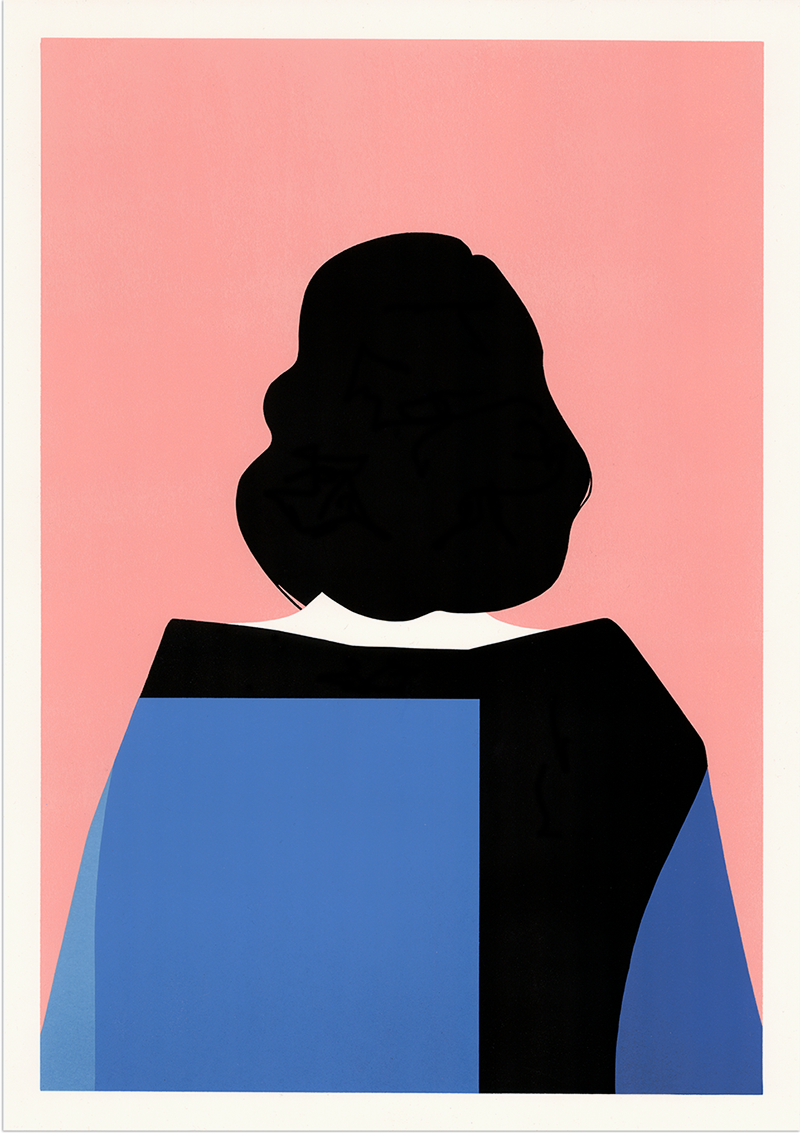
He also uses really subtle textures, including what looks to be a custom brush for defining shape and texture, something similar to what I use in my own practice. I will look to incorporate these techniques into my practice in the future.
Tuesday, 21 February 2017
Working Digitally
I really want to move away from sketchbook work. I am really getting used to the roughing process, and am really starting to get some good work out of it, but I hate the process of working in a sketchbook to then transfer over to digital.
Recently I have been working with my iPad pro and Pencil a lot more, and find the process much more rewarding, I can adjust roughs, undo mistakes and work much quicker than on paper, plus I don't have to keep buying new sketchbooks and pencils etc. However, I feel pushed to use sketchbooks in my practice to tick boxes in modules, which I don't think is particularly fair but has to be done I guess.
Recently I have been working with my iPad pro and Pencil a lot more, and find the process much more rewarding, I can adjust roughs, undo mistakes and work much quicker than on paper, plus I don't have to keep buying new sketchbooks and pencils etc. However, I feel pushed to use sketchbooks in my practice to tick boxes in modules, which I don't think is particularly fair but has to be done I guess.
Thursday, 2 February 2017
Industry Contacts
I have considered who I would want to contact within the industry to interview and I think I've managed to narrow it down to my main 5.
David Doran
Although Patrick advised us to try to avoid contacting illustrators, David's practice is similar to where I want my own practice to move towards. Also David has recently left university studying illustration so I would like to find out how he coped with moving from studentship into working as a professional. (david@daviddoran.co.uk)
Jon & Tom (Owners at Handsome Frank Agency)
I love the work that comes out of the Handsome Frank agency, and would like to know more about how they choose which illustrators to approach/ take on and how they go about finding work for the illustrators. (jon/tom@handsomefrank.co.uk)
Sam Arthur (Co-founder of FlyingEye Books)
Sam was one of the co-founders of FlyingEye books, a great publishing house producing some really interesting works which fit the general aesthetic of my own practice. (sam@nobrowpublishing.co.uk)
Jim Stoddart (Artistic Director at Penguin Books since 2001)
I'd like to know what Jom looks for in an illustrator or designer, and the way he likes to work with regards to offering/ finding illustrators.
David Doran
Although Patrick advised us to try to avoid contacting illustrators, David's practice is similar to where I want my own practice to move towards. Also David has recently left university studying illustration so I would like to find out how he coped with moving from studentship into working as a professional. (david@daviddoran.co.uk)
Jon & Tom (Owners at Handsome Frank Agency)
I love the work that comes out of the Handsome Frank agency, and would like to know more about how they choose which illustrators to approach/ take on and how they go about finding work for the illustrators. (jon/tom@handsomefrank.co.uk)
Sam Arthur (Co-founder of FlyingEye Books)
Sam was one of the co-founders of FlyingEye books, a great publishing house producing some really interesting works which fit the general aesthetic of my own practice. (sam@nobrowpublishing.co.uk)
Jim Stoddart (Artistic Director at Penguin Books since 2001)
I'd like to know what Jom looks for in an illustrator or designer, and the way he likes to work with regards to offering/ finding illustrators.
Screen Printing
I tried some screenprinting today.. Which as you can see from the images below didn't quite go as well as I'd anticipated. As bad as the outcomes turned out I did quite enjoy the process and I actually like the textures the are created through it.
I need to carry on experimenting with trying to achieve different textures within screen printing as I think it can fit in really well with my practice and the way my practice is moving.


I need to carry on experimenting with trying to achieve different textures within screen printing as I think it can fit in really well with my practice and the way my practice is moving.


Monday, 16 January 2017
OUIL504- Evaluation
Summative Evaluation (See Evaluation Guidance on next page for more information)
You are required to write a 750 word Summative Evaluation of this module.
Please type up your Summative Evaluation in the box below. Make a PDF of the document, print out a copy to submit with your portfolio of work and post the PDF as your final post on your OUIL504 blog.
My main objective coming into this module was to 1, understand my practice more and develop my work as a whole, and 2, to experiment more with print based processes. I was incredibly unfamiliar with a lot of the print techniques, having never really tried them to this extent before, however I have really enjoyed experimenting with shape and texture a lot and think this module has been my biggest transformative moment for me as an illustrator as I have a much better understanding of my work and general 'style'.
The main thing I am taking away from this brief is the experience of working with printed texture and digital manipulation to create a more natural looking aesthetic within my work. Throughout last years modules I was constantly striving to find a better way of adding a more natural and hand made feel to my work and I feel through experimentation with the different processes I have definitely pushed it to a new level within my own work. Roughing has also been a big part of the module for me; I have taken much more care with my hand drawn roughs and tried my best not to rush straight to digital work as I know this can be really damaging to my work. I will look to continue this and am looking to start using my roughs more effectively by scanning them in and working with the actual roughs to develop my image. Throughout the module, I feel as though I could have experimented more with the actual production of images through different print methods. I spent most of my time collecting textures from the processes and manipulating them digitally rather than creating shape based images directly from the process. My thinking behind this was that I know how I like to work digitally, using shape to create images on there. I will definitely look to continue to experiment with image creation through print as the little I did with lino, I feel, came out quite nicely, and I actually really enjoyed making them. I feel towards the middle of the module, around November, I fell out of love with SB2, I was feeling really out of touch with my author, and my workload definitely slacked off a bit as I simply didn't enjoy what I was making. This is the point which I completely switched my idea and the work I was making in the brief took a nosedive. This resulted in my final prints completely lacking in concept and I am really not happy with how they turned out, I don't think they give a proper reflection on the work I have put in throughout the module.
My attendance within this morning has also been incredibly poor. I missed out on numerous crits and general catch-ups with Teresa and Ben through various reasons and this definitely affected my work. I wholeheartedly regret missing so much within this module as I think my work and my general experimentation within the module would have benefited from having that guidance and feedback throughout. I will definitely look to attend more throughout the next module, and I really am looking forward to having Teresa and Ben's guidance to push my work to a new level and develop my practice as an illustrator.
Going forward, I want to experiment more with the screen printing process. I feel I suffered from a lack of confidence with it within this module as I did not feel I was good enough to be able to experiment properly with it, but as I stated in my blog, I really like how screenprinting CAN look, I just feel I need to develop my own technique to make it look that way. Overall, I have really enjoyed this module, minus the slight blip in the middle and the frankly nightmarish December I had. I am happy with my progression as an illustrator within the module and I am really happy with the way my work is starting to move and how my skills are beginning to develop as a craftsman. Attendance has been my biggest let down with this module, as I think the lack of feedback and guidance I received really damaged how my work ended up and the general quality of my work throughout the module. I will 100% look to be completely involved in the next module and look to progress at a much faster rate. |
Subscribe to:
Comments (Atom)